
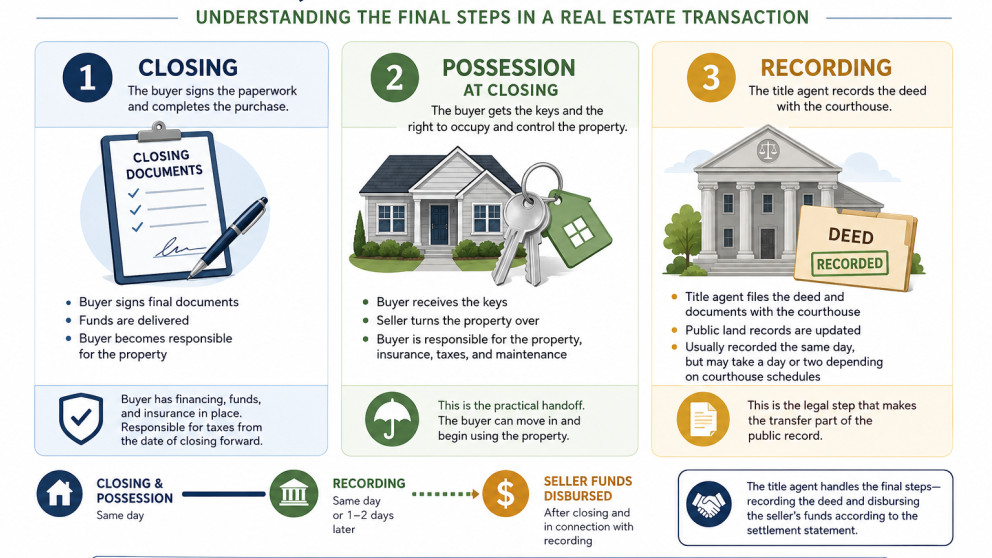
Closing, Possession, and Recording: What Buyers and Sellers Should Understand
In a real estate transaction, a few important terms often get used together: closing, possession at closing, and recording. They are related, but they do not all mean exactly the same thing. Understanding the difference helps buyers and sellers know what to expect on the day of closing and in the day or two that may follow.
What Is Closing?
Closing is the point in the transaction when the buyer signs the final paperwork, pays the required funds, and completes the purchase of the property. It is the formal transfer process where the buyer agrees to the final terms, signs the necessary documents, and becomes responsible for the property going forward.
At closing, the buyer typically has their financing, funds, and insurance in place. Once the closing documents are signed and the required funds are delivered, the buyer takes on the responsibilities of ownership.
This includes responsibility for things such as real estate taxes from the date of closing forward and maintaining proper insurance on the property.
What Does Possession at Closing Mean?
When we say that the buyer receives possession at closing, it means the buyer gets the right to occupy and control the property once the closing paperwork is signed and the transaction is completed.
In plain terms, this means the buyer gets the keys at closing.
Possession at closing is important because it marks the practical handoff of the property. The seller has turned the property over, and the buyer is now responsible for it. From that point forward, the buyer should have insurance in place, is responsible for the property, and will handle taxes and other ownership obligations according to the settlement terms.
For most buyers, this is the moment they think of as “owning the property.” They have signed, paid, received the keys, and can begin using the property.
What Is Recording?
Recording is a separate step that happens after the closing documents are signed. Recording is when the deed is officially filed in the courthouse land records.
The title agent handles this process. After closing, the title agent takes the signed deed and other required documents and submits them to the appropriate courthouse for recording. Once the deed is recorded, the public land records reflect the transfer from the seller to the buyer.
In many cases, the title agent may be able to record the deed the same day as closing. Other times, recording may take a day or two. This can depend on the timing of the closing, the courthouse schedule, staffing, document processing, or whether the courthouse is still accepting recordings that day.
This delay does not necessarily mean something is wrong. It is often simply a matter of logistics.
When Does the Seller Get Paid?
After the closing documents are signed and the title agent completes the required steps, the title agent will disburse the seller’s funds according to the settlement statement and closing instructions.
In many transactions, the seller’s funds are released after closing and in connection with recording. The title agent is responsible for making sure the documents, funds, and title requirements are properly handled before disbursement.
This is why sellers should understand that “closing” and “funds disbursed” may not always feel like the exact same instant. The process is handled carefully to make sure the deed is recorded and the transaction is properly completed.
Why These Terms Matter
The important thing to remember is that closing, possession, and recording are connected, but they are not identical.
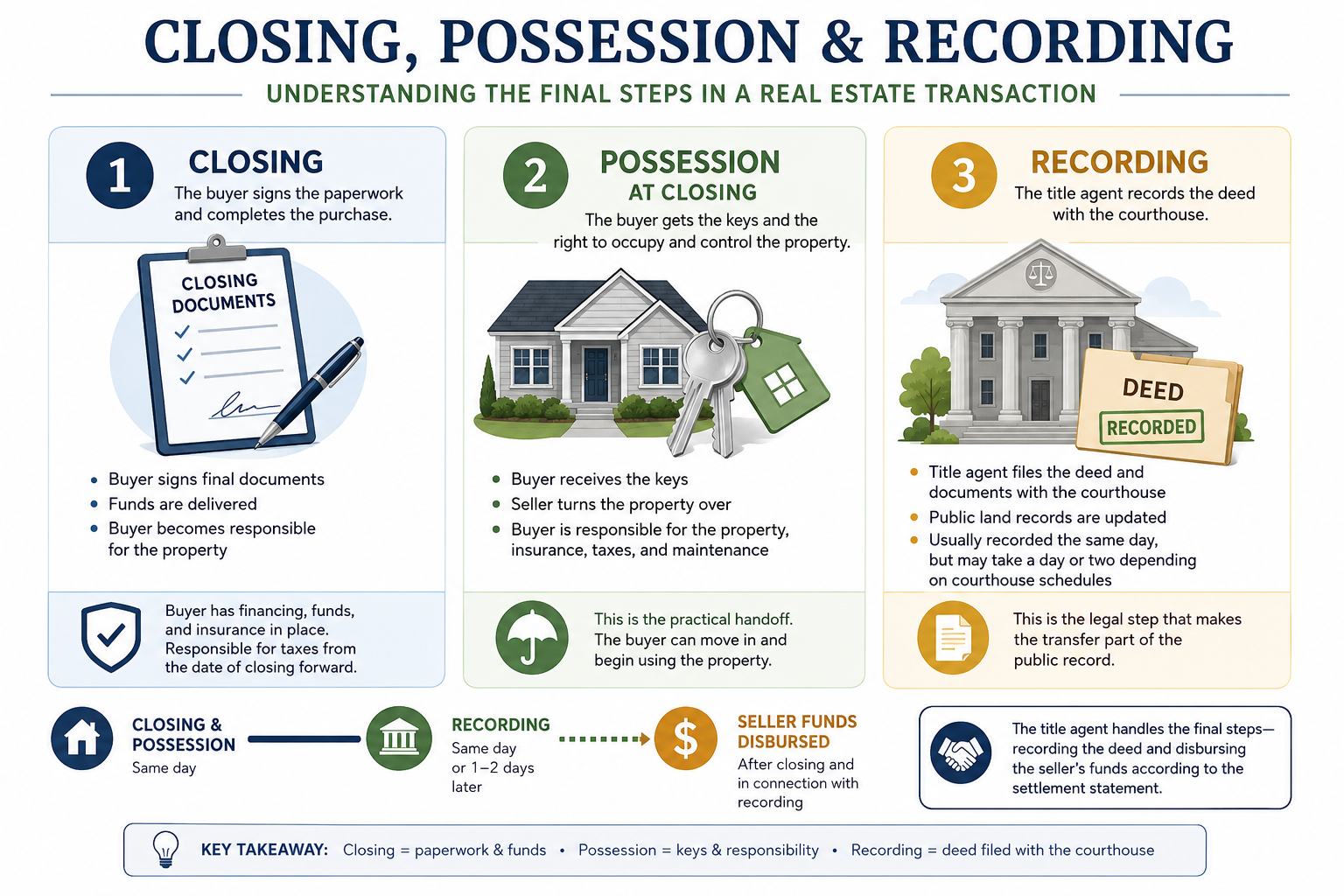
Closing is when the buyer signs the paperwork and completes the purchase process.
Possession at closing means the buyer gets the keys and takes responsibility for the property at closing.
Recording is when the deed is filed with the courthouse and made part of the public land records.
In a normal transaction, the buyer signs the paperwork, receives possession of the property, has insurance in place, becomes responsible for taxes and ownership obligations, and the title agent then records the deed and disburses the seller’s funds.
Sometimes all of this happens smoothly on the same day. Sometimes the courthouse schedule means recording takes another day or two. Either way, the title agent is responsible for guiding the final steps so the transfer is completed properly.
Final Thought
Real estate closings involve both a practical handoff and a legal process. The practical handoff is when the buyer signs, receives the keys, and takes possession. The legal follow-through is when the deed is recorded and the funds are disbursed.
Understanding the difference helps both buyers and sellers have realistic expectations and avoid confusion at the finish line.